

What is Workforce Planning?
Workforce planning projects future headcount and labor cost needs, then tests scenarios against budget and business goals. It helps leaders time hires, manage backfills, and anticipate skill gaps.
CompLogix models current and planned positions, applies compensation assumptions, and rolls totals into budgets and reports. Teams quickly compare scenarios across departments, route approvals, and keep workforce plans tied to compensation cycles.
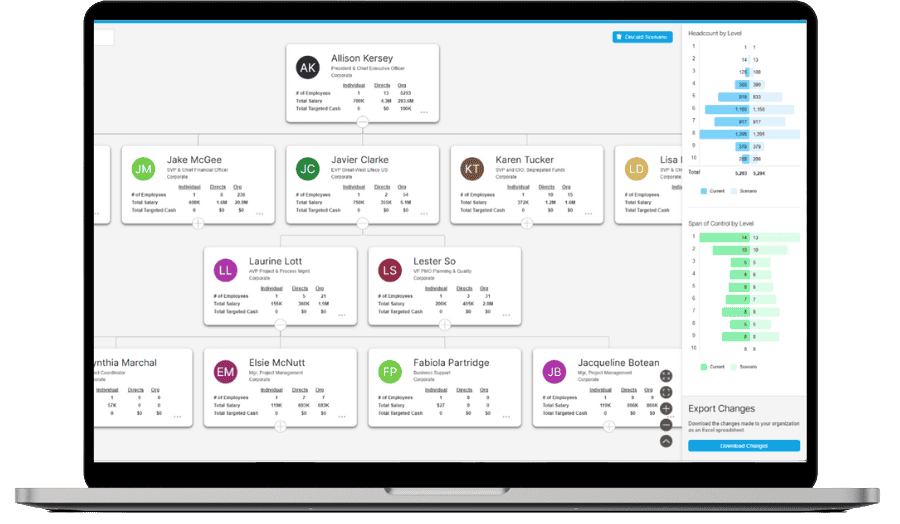
Workforce Planning in Action
Build scenarios and quantify budget impact
Create a baseline plan, add proposed roles or changes, apply assumptions, then compare scenarios to understand cost deltas and timing impact before committing.
- Add positions, backfills, and start dates to a plan.
- Apply pay assumptions and calculate fully loaded cost.
- Compare scenarios and share for review and approval.
Frequently Asked Questions
How does CompLogix support workforce planning scenarios
CompLogix lets teams model current and planned positions, apply compensation assumptions, then compare scenarios to see cost differences by timeframe, department, and role, all in one place.
Can CompLogix connect workforce planning to compensation planning
Yes. Workforce plans use compensation assumptions and outputs that align with compensation workflows, reducing mismatches between planned headcount costs and compensation cycle decisions.
What inputs are needed to build a workforce plan in CompLogix
Teams typically start with current positions and org structure, planned hires or changes, effective dates, and compensation assumptions. CompLogix uses these inputs to calculate totals and support scenario comparisons.